The Ghana Gold Board (GoldBod) has called on local and international investors to take advantage of Ghana’s expanding gold refining agenda by establishing refineries that meet international standards, as the country intensifies efforts to refine raw gold locally for export.
GoldBod, which has sole statutory authority to buy, sell, weigh, grade, assay and export gold and other precious minerals in Ghana, says it has the capacity to supply sufficient gold to prospective refineries that demonstrate a clear pathway toward London Bullion Market Association (LBMA) certification.
Speaking to Joy News on the sidelines of an inspection of the first batch of locally refined gold at the Gold Coast Refinery, Chief Executive Officer of GoldBod, Sammy Gyamfi, Esq., said the Board’s refining strategy is firmly anchored in international quality standards.
“We are inviting other investors to take advantage of what we have started with Gold Coast Refinery to also invest in establishing refineries because once you have the capacity like they do, and you are able to show us your clear strategy and pathway to LBMA accreditation, we will partner with you and give you gold,” he said.
Mr. Gyamfi stressed that GoldBod’s objective goes beyond domestic refining to achieving global market acceptance for Ghana’s gold.
“You must understand that this is not just a refinery; there is strategy behind the refinery. We are not just interested in refining gold, but we are interested in refining gold that conforms with international standards, which is the LBMA certification standards, and we want to attain that within the shortest possible time,” he explained.
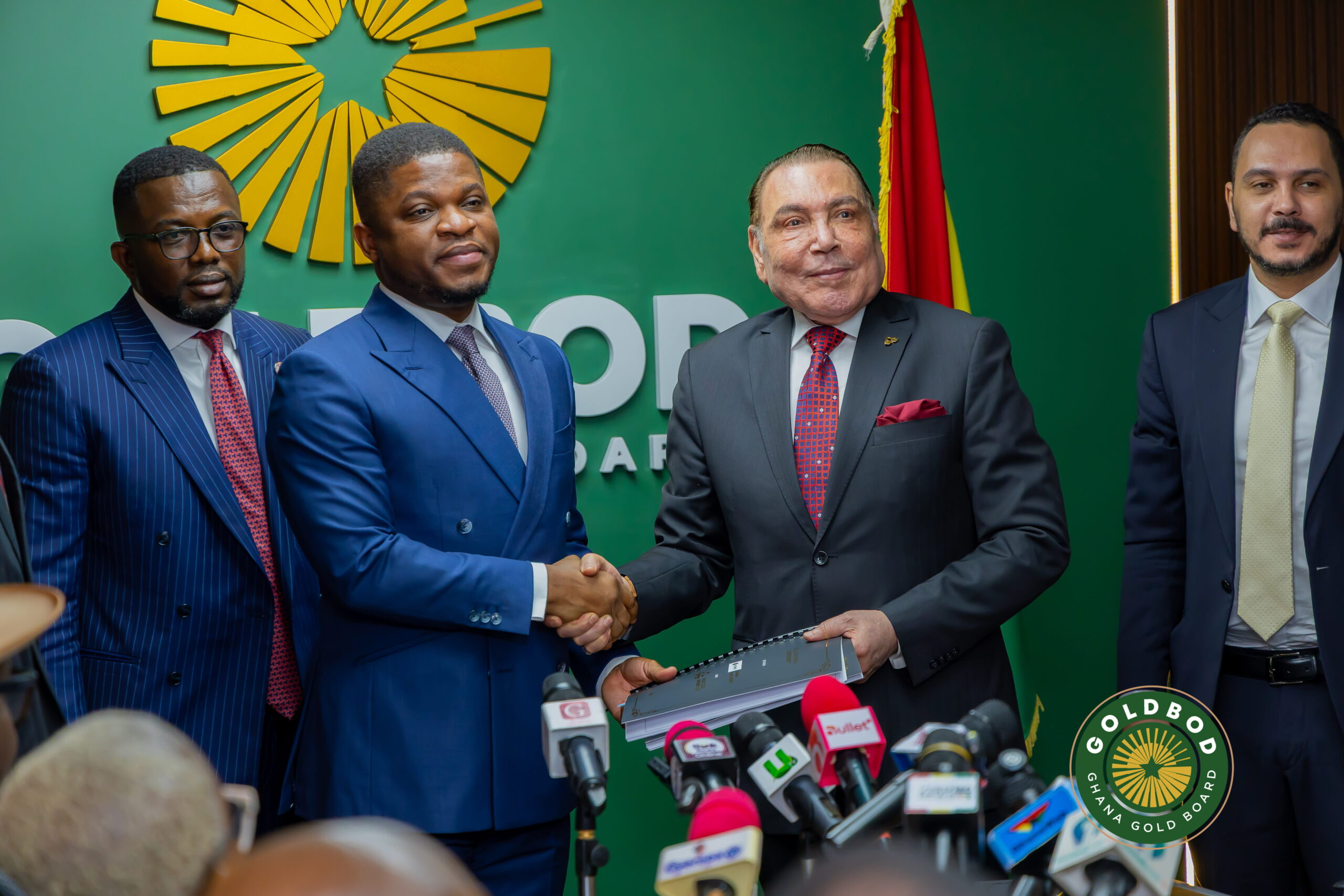
His comments follow the commencement of domestic gold refining under a landmark partnership between GoldBod, Gold Coast Refinery and Rand Refinery, Africa’s only LBMA-accredited refinery.
Under the agreement, GoldBod is supplying one metric tonne of gold per week for refining, marking a decisive shift from the export of raw gold to local value addition.
According to the GoldBod CEO, the agreement allows for flexibility in supply volumes based on refinery capacity.
“When we started with the weekly supply volume of up to one tonne, it means that so long as the refinery has the capacity, we will give them up to a tonne. If they are able to exceed that capacity, the contract provides for us to vary that quantity,” he said.
Mr. Gyamfi noted that GoldBod currently purchases an average of 2.5 tonnes of gold per week from the artisanal and small-scale mining sector alone, giving the Board the ability to scale up supply as refining capacity expands.
“If they increase their capacity, we have more gold to give them, and that is why we are here working with them to see the capacity increase from one tonne to two tonnes,” he added.
As part of the agreement, Ghana, through GoldBod, has secured a 15 percent equity stake in Gold Coast Refinery, strengthening national participation in the refining process and deepening Ghana’s footprint across the gold value chain.
The refining initiative is expected to significantly boost value addition, create jobs, improve traceability, and enhance Ghana’s competitiveness in the global gold market, while positioning the country as a regional hub for LBMA-compliant gold refining.