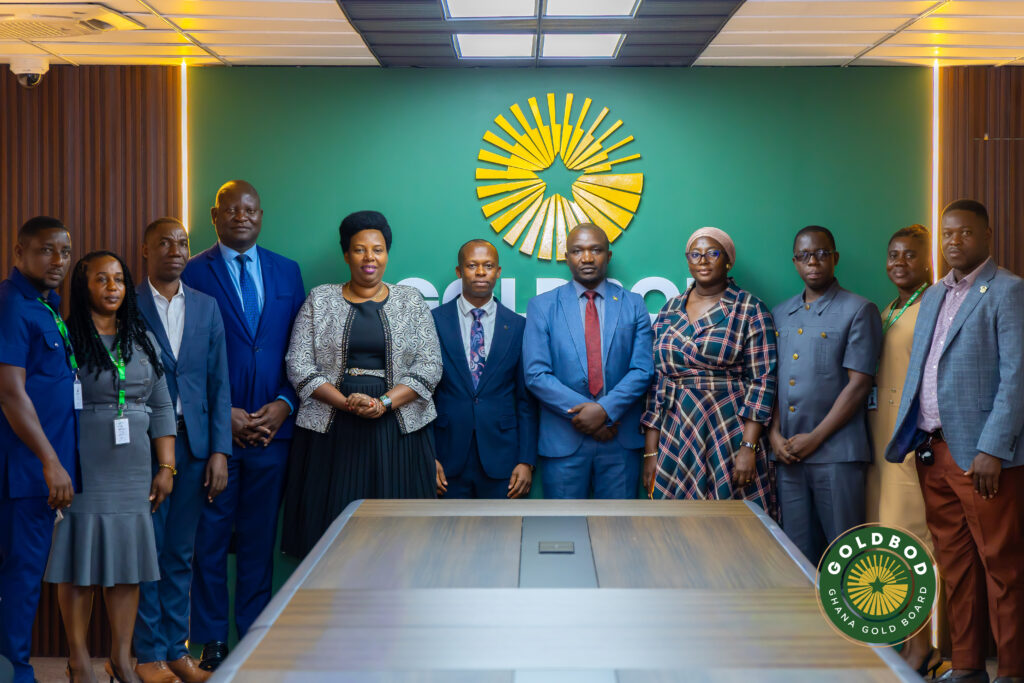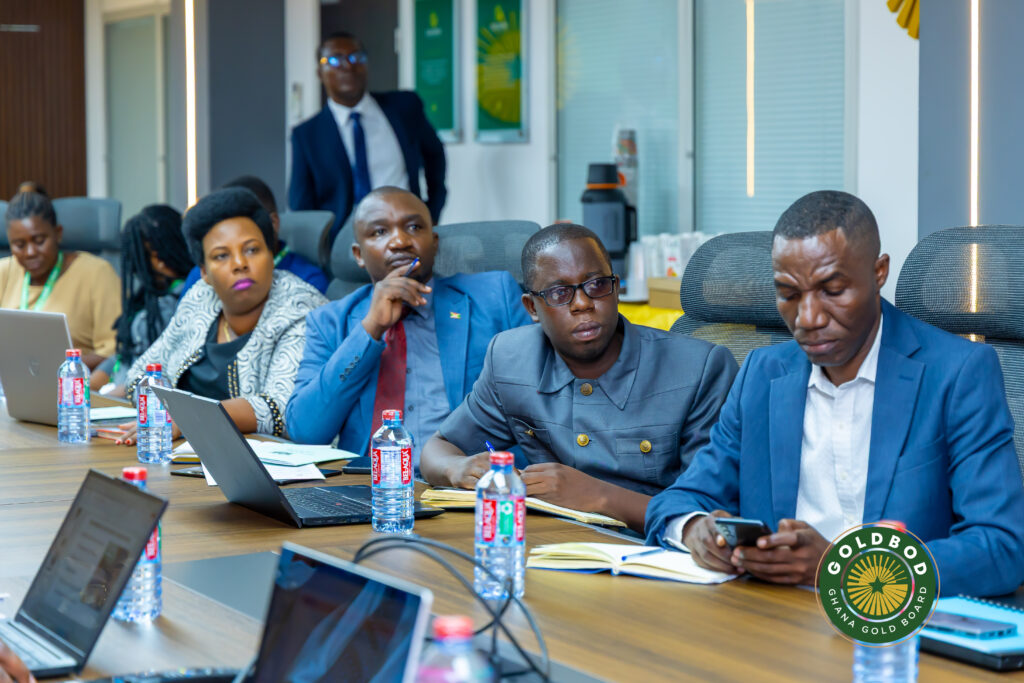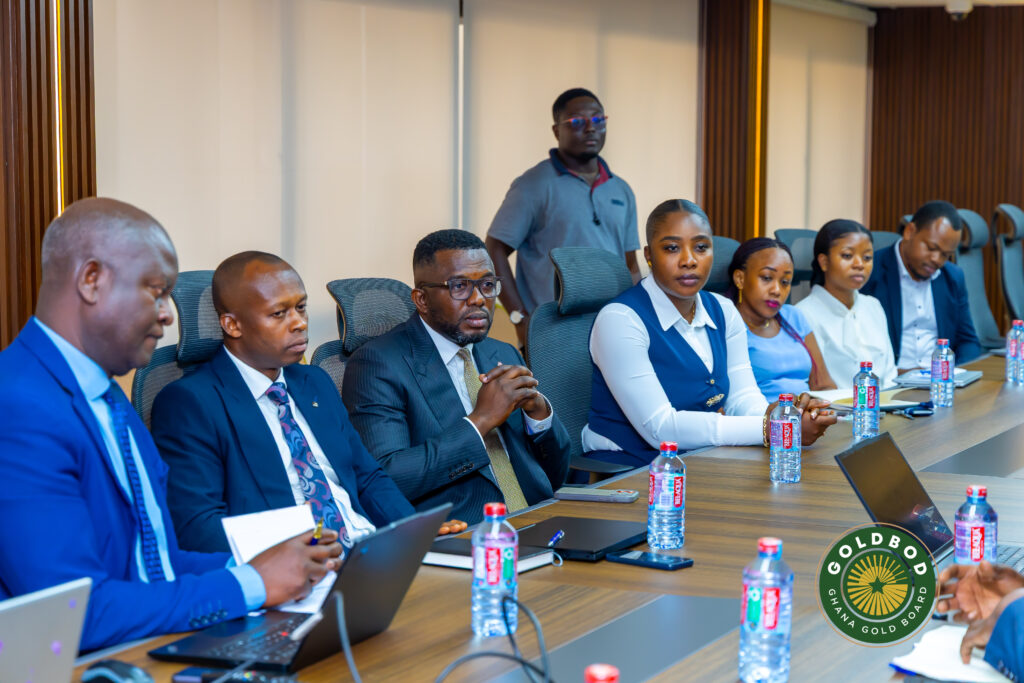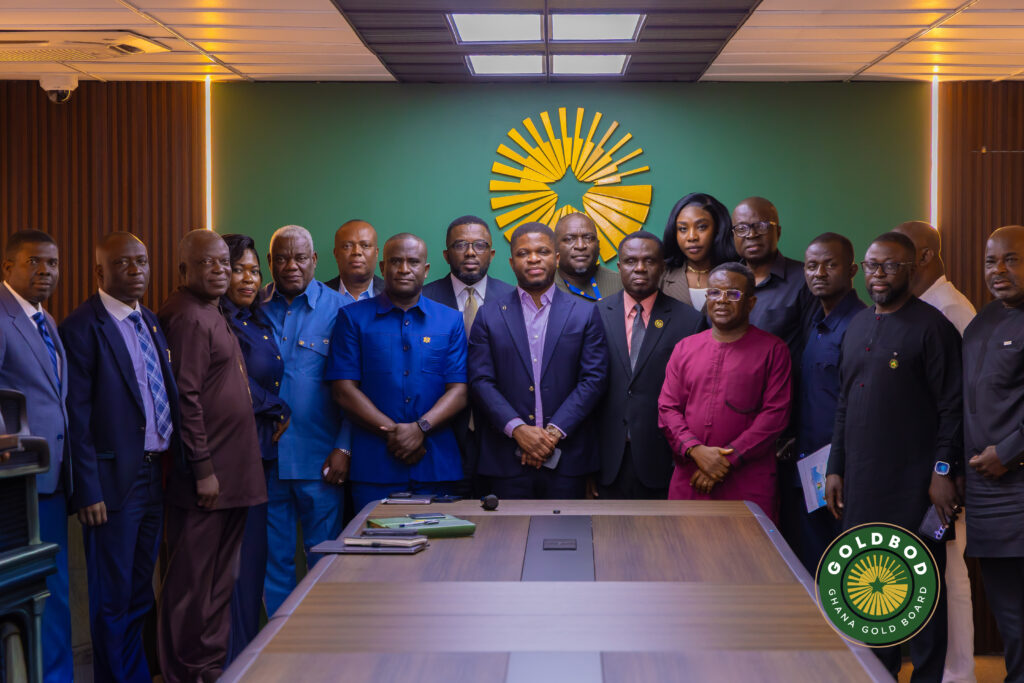
The Ghana Gold Board (GoldBod) has hosted high-level delegations from Burundi and Tanzania seeking to understudy Ghana’s evolving gold sector reforms and the operational model of the state gold trading authority.
The delegation from Burundi, comprising officials from the Office of the President and the country’s Public-Private Partnership Agency, visited the GoldBod on Tuesday, May 26, 2026, to learn from the institution’s operational successes, regulatory framework, and strategic interventions within Ghana’s gold sector.
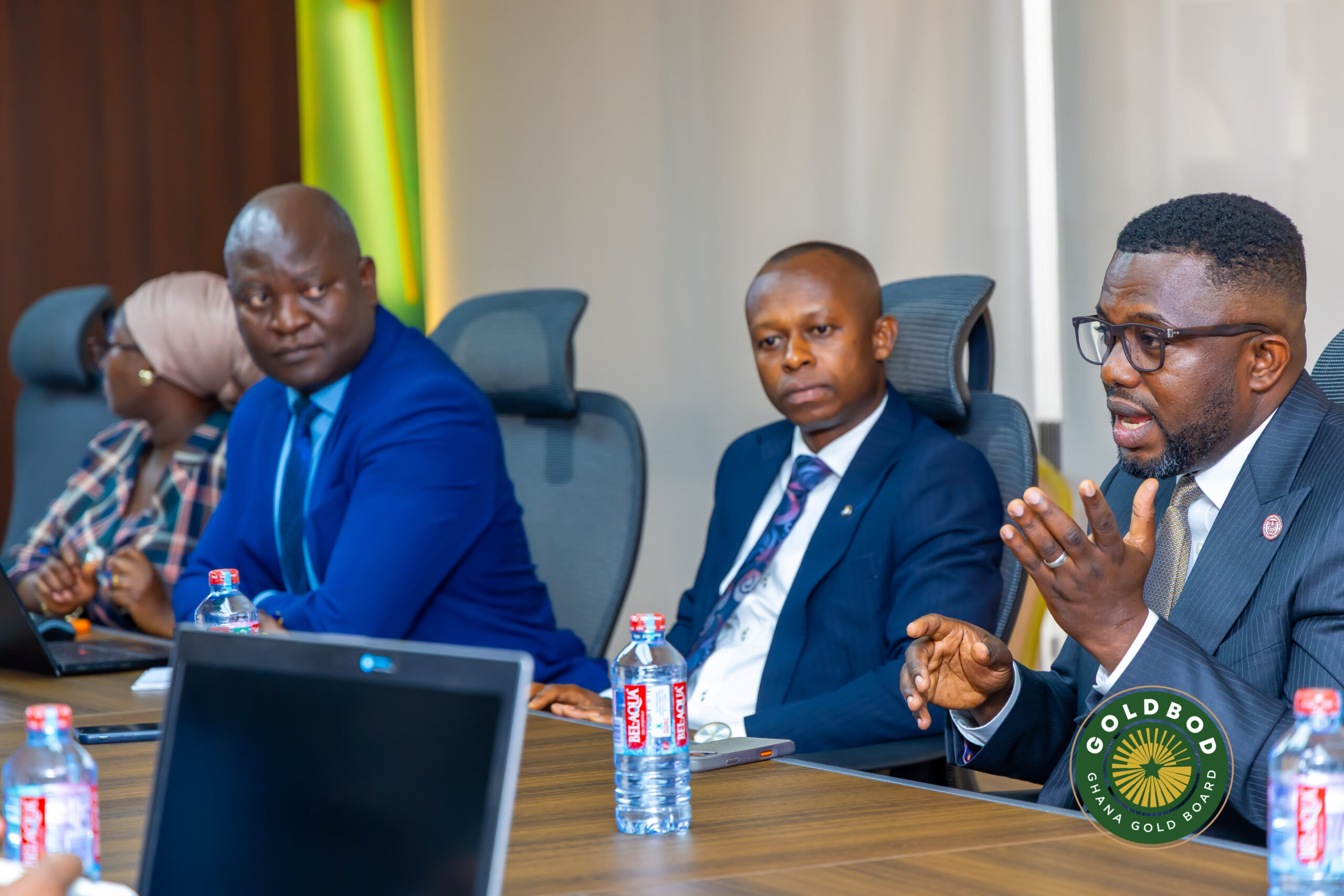
The visiting team was received by the Deputy Chief Executive Officer of GoldBod, Richard Nunekpeku, Esq., who provided a comprehensive overview of the institution’s establishment, operations, achievements, and challenges since the passage of the Ghana Gold Board Act, 2025 (Act 1140).
Mr. Nunekpeku explained the rationale behind the establishment of GoldBod and highlighted the institution’s mandate to oversee, regulate, and undertake the buying, selling, assaying, refining, and export of gold while generating significant forex inflows and reserve accumulation for the Bank of Ghana.
He further outlined key reforms introduced by the Board, including efforts aimed at formalizing the artisanal and small-scale mining sector, enhancing transparency in the gold trade, and strengthening Ghana’s foreign exchange reserves through strategic gold purchasing initiatives.
As part of the engagement, Mr. James German, Deputy Director for Responsible Mining at GoldBod, gave a presentation on the institution’s operational structure and regulatory arrangements.
Mr. German explained the GoldBod licensing regime and elaborated on the institution’s ongoing traceability initiatives, revealing that GoldBod is currently procuring a comprehensive traceability system to strengthen monitoring and accountability throughout Ghana’s gold value chain.
According to him, the system is expected to validate transparency, responsible sourcing, and traceability from mining sites to export points while supporting anti-smuggling efforts and international compliance standards.
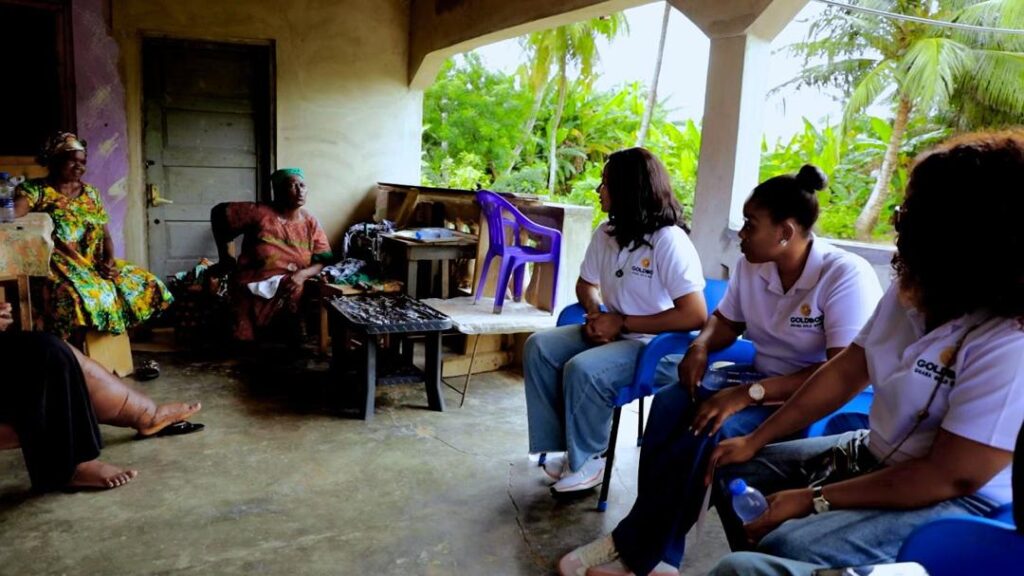
He also highlighted GoldBod’s support for responsible mining practices through technical assistance and stakeholder engagement within the small-scale mining sector.
On value addition, Mr. German briefed the delegation on GoldBod’s strategic partnerships with Gold Coast Refinery and Royal Ghana Gold Refinery as part of government’s broader agenda to refine Ghana’s gold locally before export.
Joining the meeting was a delegation from the Central Bank of Tanzania, which was also on a study tour to gain insight into Ghana’s Domestic Gold Purchasing Programme, now restructured under the Ghana Accelerated National Reserve Accumulation Programme (GANRAP), and GoldBod’s role within Ghana’s gold sector.
Officials of GoldBod led by the Director for Finance, Mr. George Baah-Danquah, made a presentation on the financial architecture of GoldBod’s operations and the institution’s contribution to Ghana’s economy.
Mr. Baah-Danquah highlighted GoldBod’s impact on foreign exchange inflows, reserve accumulation, and economic stability, stressing that the institution continues to play a critical role in strengthening Ghana’s external reserves through strategic gold purchases.
He also referenced GoldBod’s recently published audited financial statements, noting that the institution recorded a significant operational surplus and remains in a strong financial position.
The engagements formed part of growing regional interest in Ghana’s gold sector reforms, particularly GoldBod’s efforts toward traceability, responsible sourcing, value addition, and reserve accumulation within the framework of Africa’s evolving mineral economy.