The debate over the reported $214 million loss by the Bank of Ghana and the subsequent political storm surrounding the Ghana Gold Board has taken a new turn, with the Founding President and CEO of IMANI Africa, a prominent policy think tank, publicly commending the institution for its contributions to the national economy.
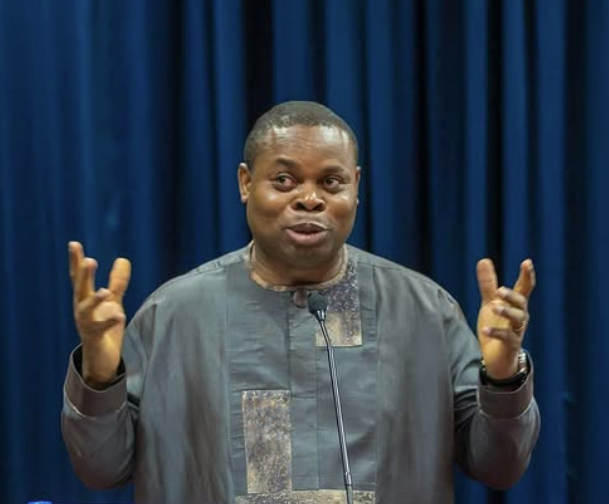
In a Facebook post that has since attracted widespread attention, the IMANI Africa CEO, Franklin Cudjoe described GoldBod’s leadership under Sammy Gyamfi as “true patriots,” highlighting the Board’s pivotal role in boosting Ghana’s foreign reserves.
“The GoldBod has brought us substantial reserves which have not only helped absolve the huge losses Ghana incurred through the G4R programme, but are also helping with our debt service obligations,” the post read.
The remarks come amidst heated criticism from opposition politicians, who have sought to link the GoldBod to alleged financial mismanagement and the Bank of Ghana’s reported loss.
Analysts and stakeholders, however, stress that such claims misrepresent the facts surrounding GoldBod’s operations.
Established under ACT 1140, the Ghana Gold Board was mandated to formalize the small-scale mining sector, improve traceability in gold trading, and support responsible mining practices, all while contributing to national economic stability.
The G4R programme, a central initiative in GoldBod’s portfolio, was designed to acquire gold from licensed aggregators and small-scale miners, thereby formalizing the sector, enhancing traceability, and generating foreign exchange for the state.
While the programme has incurred operational costs, officials note that these are strategic and necessary for incentivizing market participation and achieving maximum FX accumulation.
The IMANI Africa CEO also praised the government’s broader fiscal management, pointing to the Finance Minister’s efforts in reducing Ghana’s public debt from 61% of GDP to 45% within a single year.
“I think we should be loaning money to the IMF, so they can help other less endowed countries,” the post quipped, underscoring confidence in Ghana’s improving economic fundamentals.
Experts say the political contention surrounding GoldBod is partly rooted in the historical challenges of gold trading in Ghana.
For decades, gold mining, particularly small-scale operations, has been characterized by informal and unregulated practices, which often made the sector vulnerable to accusations of illegality and financial opacity.
GoldBod’s establishment represents a deliberate policy intervention to formalize and regulate the value chain, introduce traceability, and ensure that gold trading contributes meaningfully to the national economy.
In line with these objectives, the Board has been developing a blockchain-based track and trace system to ensure that every gram of gold purchased from licensed aggregators can be traced to its responsible mine of origin.
This initiative, set for implementation in 2026, is expected to strengthen compliance, improve transparency, and further insulate the institution from claims of complicity in illegal mining or financial mismanagement.
Observers note that the positive impact of GoldBod’s interventions goes beyond foreign exchange accumulation. By promoting formalization, traceability, and fair pricing for small-scale miners, the Board is enhancing accountability in the sector, supporting environmentally sustainable practices, and contributing to broader economic stability.
The public support from IMANI Africa adds weight to claims that recent political criticisms of GoldBod may be more about optics than substance.
As Ghana navigates a complex economic environment, institutions like GoldBod are increasingly seen as critical instruments for stabilizing reserves, promoting transparency in resource management, and mitigating financial risks.
With robust oversight, stakeholder engagement, and the deployment of technological innovations, the Board’s efforts are poised to consolidate Ghana’s position as a responsible and well-managed player in the global gold market.