African finance ministers laud Ghana’s GOLDBOD at high-level AfDB meeting in Washington
Finance ministers from five African countries have hailed Ghana’s pioneering GoldBod model as a benchmark for resource-led development across the continent.
The meeting, held on the sidelines of the 2025 IMF–World Bank Annual Meetings in Washington, D.C., highlighted Ghana’s approach to natural resource governance and its potential to inspire similar reforms across Africa.
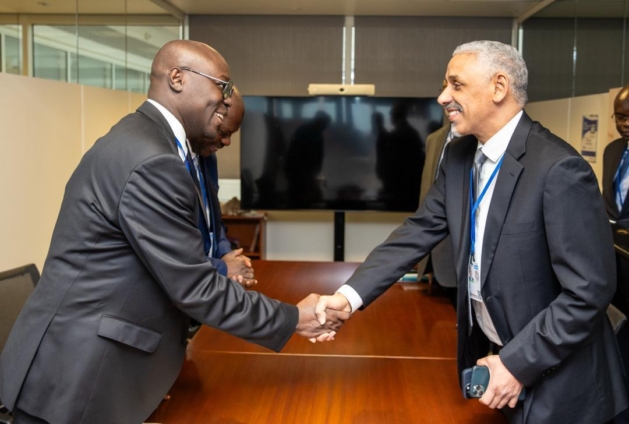
The high-level meeting brought together Finance Ministers from Ghana, Liberia, Sierra Leone, The Gambia, and Sudan for strategic discussions with the President of the African Development Bank (AfDB) Group, Dr. Sidi Ould Tah.
Among the wide-ranging issues on Africa’s development agenda, natural resource management stood out, with Ghana’s GoldBod drawing particular praise and attention.
The ministers commended the initiative for its role in transforming how Ghana leverages its gold resources to support economic growth, strengthen exchange rate stability, and promote sustainable development.
They noted that the GoldBod model represents a significant shift from traditional approaches to natural resource management, demonstrating how African countries can capture greater value from their mineral wealth.
Several countries within the AfDB constituency expressed strong interest in adopting similar approaches to enhance transparency, strengthen resource governance, and improve the economic returns from their natural resources.
The Ghana Gold Board (GoldBod) is the sole authority with the exclusive mandate to buy, sell, weigh, grade, assay, value, and export gold and other precious minerals in Ghana.
Operating under the oversight and supervision of the Ministry of Finance, GoldBod plays a central role in regulating the gold sector and ensuring that the exploitation of Ghana’s mineral resources contributes directly to national development.
Ghana’s central bank gold reserves climbed to a record 37.06 tonnes by the end of September 2025, driven largely by GoldBod and its domestic gold procurement strategy.
The increase, representing a 21.3% rise from 30.53 tonnes in January, highlights Ghana’s growing effort to position gold not only as an export commodity but also as a strategic reserve asset to strengthen economic resilience.