GoldBod CEO Explains Why BoG’s US$1.7bn DGPP Loss Is Not a GoldBod Loss
The Chief Executive Officer of
the Ghana Gold Board (GoldBod), Sammy Gyamfi, has drawn a clear distinction
between GoldBod’s financial performance and the US$1.7 billion loss recorded by
the Bank of Ghana (BoG) under the Domestic Gold Purchase Programme (DGPP) in
2025, saying the reported loss cannot be attributed to GoldBod.
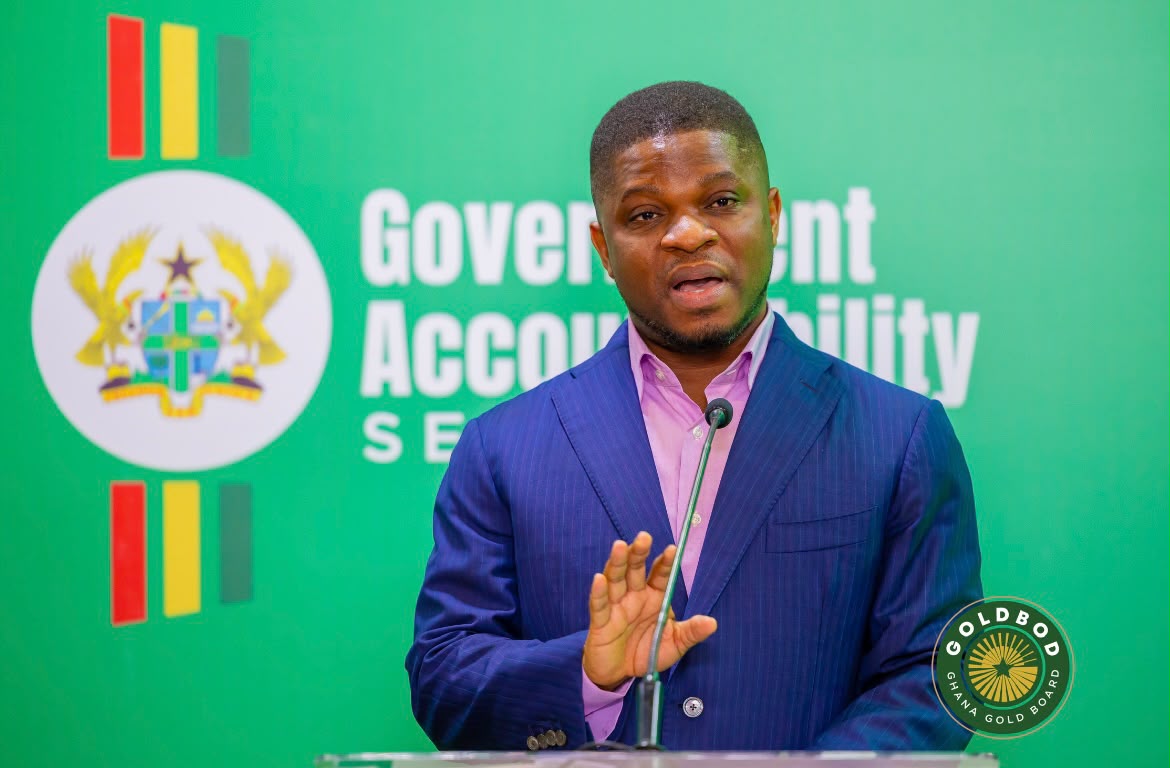
Speaking at the Government
Accountability Series at the Jubilee House on Wednesday, August 19, 2026, Mr.
Gyamfi said GoldBod’s role under the DGPP was limited to purchasing and
aggregating gold for the central bank as a buying agent, with no involvement in
the subsequent sale of the gold, determination of selling prices or negotiation
of off-take agreements.
He said the role was inherited
from the former Precious Minerals Marketing Company (PMMC) under a 2023 Gold
Purchase Agreement with the BoG, and that GoldBod fully accounted for
approximately GH₵133 billion advanced to it for gold purchases in 2025.
“The GoldBod had no role in the
sale of gold by the BoG under the DGPP. It was not a signatory to off-take
agreements under the DGPP in 2025. Neither was it involved in determining
selling price or sale terms,” Mr. Gyamfi stated.
He further challenged claims
linking GoldBod’s fees to the reported losses, explaining that the 0.258% assay
fee and 0.5% service fee paid to GoldBod amounted to only 0.758%, compared with
the approximately 17% loss reported by the IMF; adding that the fees were
legitimate charges for services rendered and were not unique to GoldBod.
Mr. Gyamfi also pointed to the
IMF’s description of the losses as partly reflecting “valuation effects”,
particularly the difference between the forex bureau exchange rate used in
purchasing gold and the BoG reference rate used for accounting purposes.
He noted that the pricing and
exchange-rate arrangements were contained in the 2023 agreement predating
GoldBod.
Importantly, he said GoldBod did
not commence its own statutory trading model until March 2026, after receiving
its revolving seed trade capital in December 2025 and putting the necessary
systems in place.
The DGPP model implemented in
2025, he stressed, remained the BoG’s programme and could not retrospectively
be described as GoldBod’s trading model.
Addressing the broader economic
rationale, Mr. Gyamfi said the DGPP was designed as a foreign exchange and
economic-stabilisation intervention rather than a profit-making programme, with
gold purchased at spot prices as a deliberate policy choice.
He said the scaling-up of the
programme, which the IMF attributed to the US$1.7 billion reported loss, also
coincided with Ghana’s international reserves rising from US$8.9 billion in
2024 to about US$13 billion in 2025, alongside a 41% appreciation of the Ghana
cedi and a substantial decline in inflation.
Mr. Gyamfi meanwhile reiterated
that GoldBod itself recorded an operational surplus of GH₵907 million and an
overall surplus exceeding GH₵5.4 billion in 2025, according to its audited
financial statements.
“The GoldBod will remain focused
on its mandate. We will continue to account transparently for our stewardship
and we will not be distracted from the important work of creating value for the
Ghanaian people from the exploitation of the gold resources of our beloved nation,”
he said.
While the GoldBod CEO has clearly
disassociated the institution from the reported losses under the BoG’s DGPP, he
has not attributed those losses to mismanagement by the Bank of Ghana.
Rather, Mr. Gyamfi’s position is
that the reported losses were largely the result of the policy design of the
programme and exchange-rate valuation effects, within a broader economic
stabilisation strategy aimed at strengthening Ghana’s foreign exchange position
and supporting macroeconomic stability.