GoldBod’s Wider Economic Gains Outweigh Loss Concerns – Sammy Gyamfi
The Chief Executive Officer of the Ghana Gold Board (GoldBod), Sammy Gyamfi, says the institution’s performance should not be judged solely by reported financial losses but by its broader contribution to Ghana’s foreign exchange market, international reserves and overall economic stability.
According to him, GoldBod’s operations have generated significant foreign exchange for the country while helping to stabilise the cedi and strengthen Ghana’s reserve position.
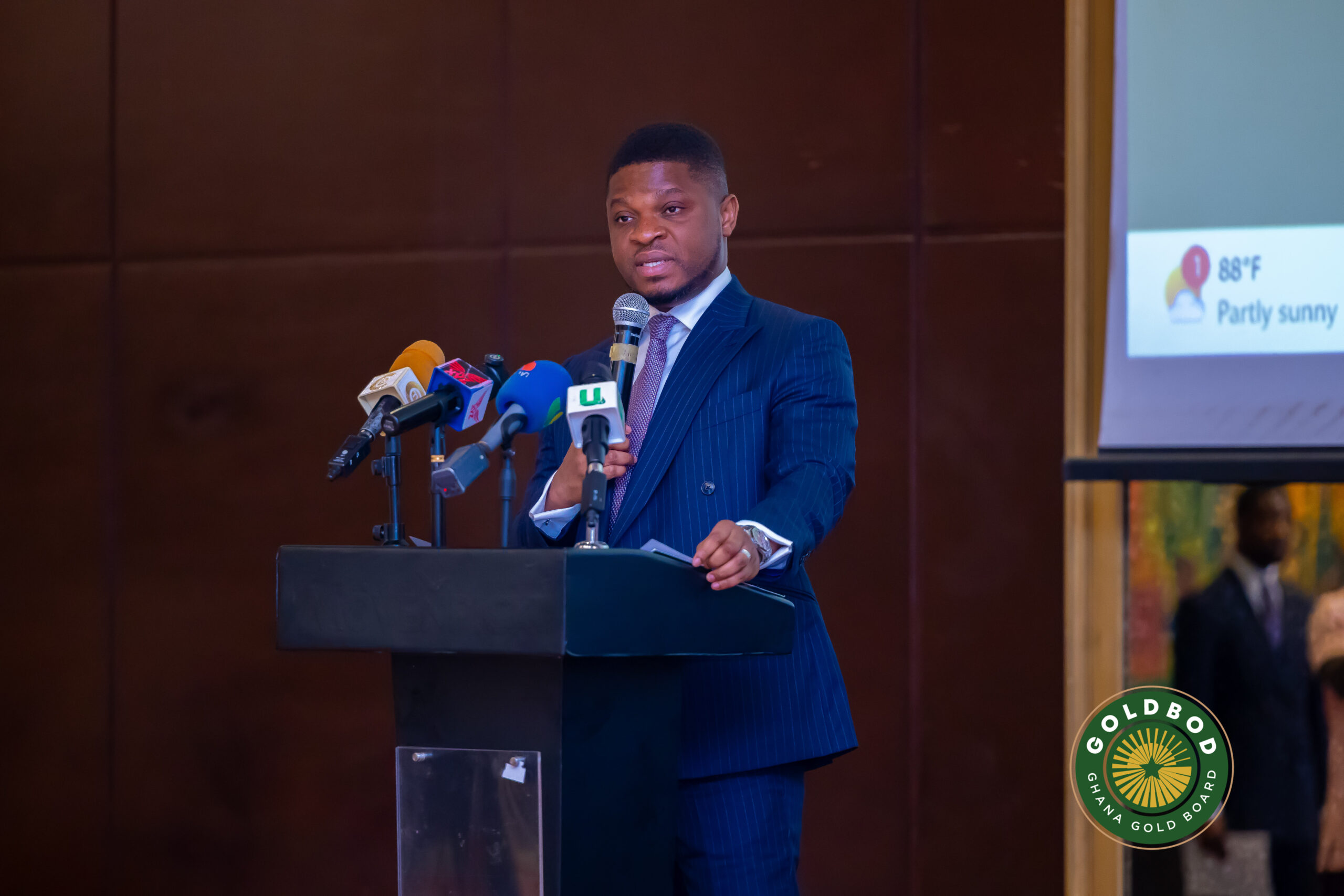
Speaking on Joy News’ Beyond the Numbers, Mr Gyamfi said the wider economic impact of GoldBod’s operations demonstrates that the institution is making a meaningful contribution to Ghana’s economic transformation.
He maintained that the key question Ghanaians should be asking is whether the institution’s activities are ultimately improving the lives of citizens.
“The question that Ghanaians should be asking is whether or not the performance of GoldBod is impacting the lives of the people of this country positively. And if you did that analysis, you would come to the conclusion that GoldBod is achieving remarkable successes, and these successes account, to a large extent, for the sustained economic stability we are all witnesses of and enjoying today,” he said.
His comments come amid concerns over losses associated with the Bank of Ghana’s domestic gold purchasing programme, which has been spearheaded by GoldBod.
The IMF Country Report No. 26/213 on Ghana, prepared as background documentation for the 2026 Article IV Consultation, states that the scaling-up of the Domestic Gold Purchase Programme in 2025 resulted in losses of more than US$1.7 billion, equivalent to about 1.5% of GDP.
However, Mr Gyamfi insists that the programme has delivered significant gains, particularly in foreign exchange generation.
He said GoldBod, working together with the Bank of Ghana, generated more than US$10.8 billion in foreign exchange earnings from the purchase and export of artisanal and small-scale mining gold.
“Together with the Bank of Ghana, we helped in generating over US$10.8 billion in foreign exchange earnings from the purchase and export of artisanal and small-scale mining gold, and that helped the Bank of Ghana to intermediate about US$10.6 billion for the market,” he said.
Mr Gyamfi further argued that the increased foreign exchange supply helped stabilise the FX market, contributing to a significant appreciation of the cedi.
He also pointed to an increase in Ghana’s international reserves, which he said rose from US$8.9 billion to US$13.8 billion by December 2025.
“This brought about FX market stability. It helped the currency appreciate by over 41%, something we have not seen in decades. International reserves increased from US$8.9 billion to US$13.8 billion by December 2025,” he added.