Ghana Targets $20 Billion Gold Purchase to Boost Central Bank Reserves- Finance Minister
Finance Minister, Dr. Cassiel Ato Forson, has disclosed that government is targeting the purchase of at least $20 billion worth of gold this year as part of efforts to strengthen Ghana’s foreign exchange reserves and support the Bank of Ghana’s reserve accumulation strategy.
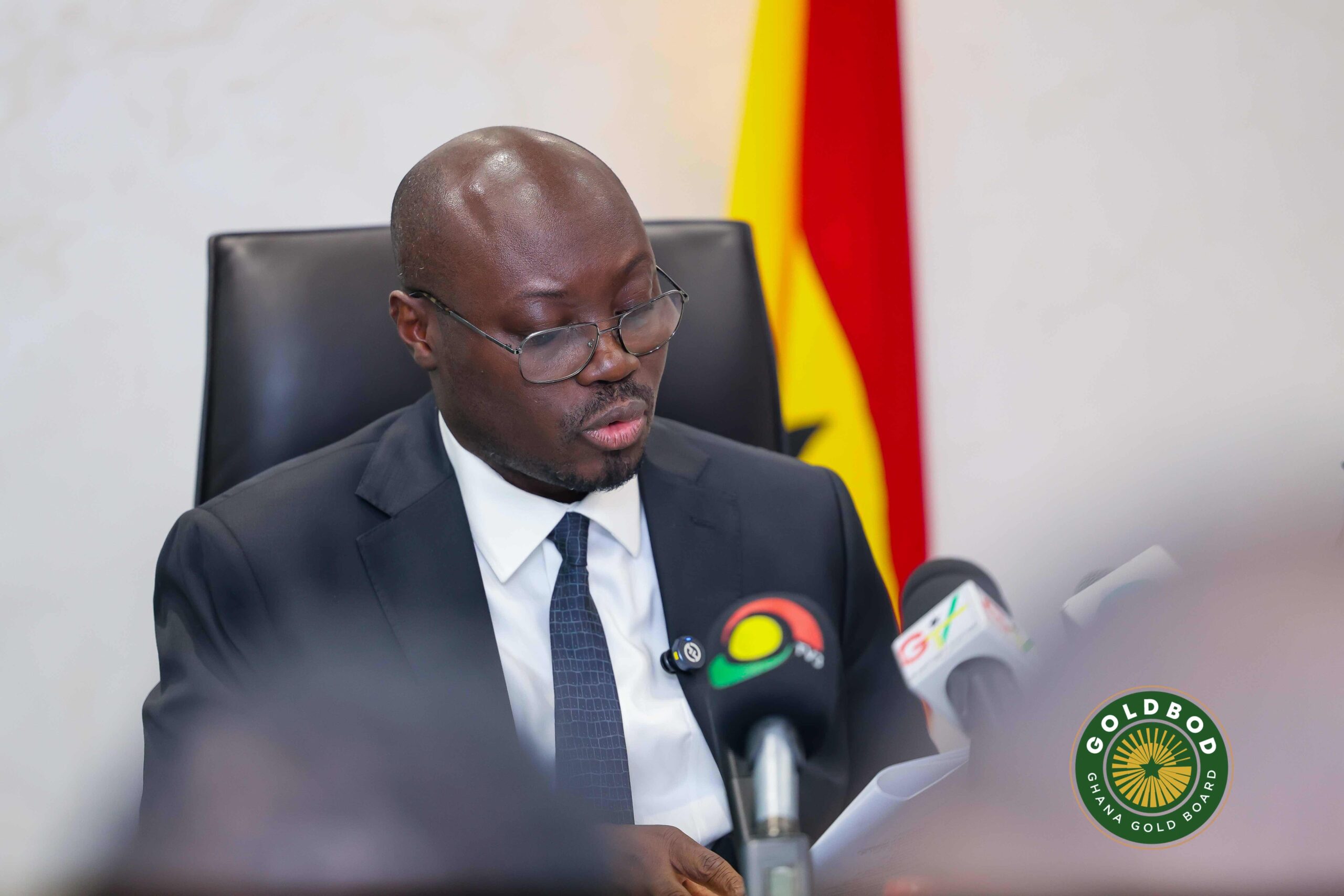
Speaking at the Ghana-UK Investment Summit, Dr. Forson explained that the initiative will involve the purchase of gold from both artisanal and small-scale miners as well as large-scale mining companies. The gold will subsequently be refined locally before being added to national reserves or traded on the international market.
According to the Finance Minister, the establishment of the Ghana Gold Board (GoldBod) was a deliberate policy intervention by government to take greater control of Ghana’s gold exports, reduce smuggling and ensure that the country benefits more from its mineral resources.
“We needed to ensure that we capture our gold to control gold exports, and so we introduced what is called the GoldBod. The GoldBod was to ensure that gold that was hitherto leaving the country through smuggling, and the country was not benefiting from the value chain, is actually stopped,” he stated.
Dr. Forson noted that within its first year of operation, GoldBod purchased gold worth approximately $14 billion, a development he said contributed significantly to strengthening the Bank of Ghana’s reserve position.
“One calendar year, we were able to buy gold up to $14 billion, and that $14 billion assisted the Central Bank to be able to build reserves. Today, the Central Bank has a very healthy reserve position, and this year we expect to buy gold at least $20 billion,” he added.
Ghana remains Africa’s largest gold producer; however, a significant portion of the country’s gold has historically been exported in raw form, limiting the economic benefits derived from the full mineral value chain.
Through GoldBod’s gold aggregation and purchasing programmes, government is seeking to increase local value retention, improve foreign exchange inflows and strengthen Ghana’s position in the global gold market.
The Chief Executive Officer of GoldBod, Sammy Gyamfi, Esq., has previously disclosed that government, through the Ghana Accelerated National Reserve Accumulation Programme (GANRAP), is targeting the purchase of three tonnes of gold every week as part of efforts to build national reserves and enhance economic resilience.
Under GANRAP, GoldBod is expected to purchase 2.45 tonnes of gold weekly from the artisanal and small-scale mining sector, while large-scale mining companies are expected to contribute an additional 0.55 tonnes per week.
Mr. Gyamfi explained that the programme forms part of President John Dramani Mahama’s broader economic reset agenda aimed at strengthening Ghana’s foreign reserves, stabilising the cedi and protecting the economy against future external shocks.
He further disclosed that following the establishment of GoldBod in April 2025, the institution initially continued the Bank of Ghana’s Domestic Gold Purchase Programme while implementing reforms, restructuring operations and building new systems within the gold trading sector.
According to him, government has now transitioned fully into GANRAP, which has received approval from Cabinet and Parliament, with a stronger focus on efficiency, cost reduction and improved value retention.
Mr. Gyamfi noted that one of the major achievements under the new programme has been the reduction in the cost of gold reserve accumulation. He explained that while the previous Domestic Gold Purchase Programme operated at a cost of about 16 percent, GANRAP has reduced the cost to 7.25 percent, with plans to further reduce it to 5 percent and eventually 3 percent.
The expansion of Ghana’s gold purchasing programme represents a major shift in the country’s mineral governance strategy, positioning gold as a key instrument for reserve accumulation, currency stability and long-term economic transformation.