Mahama's Administration Puts Gold at the Centre of Ghana’s Economic Reset
In a move aimed at permanently decoupling Ghana’s economic fate
from the volatility of external debt, the Mahama administration has positioned
the gold sector as the primary engine for the nation’s “Golden Reset.”
However,
as the government moves to centralize control, experts are warning that the
nation “cannot afford a second shock” if the transition is mismanaged.
“Taking
back control”: the Gyamfi doctrine
Leading
the charge for this structural overhaul, Sammy Gyamfi, a key figure in the
administration’s economic communications, outlined a bold vision to end decades
of “resource leakage.” Speaking at a high-level forum, Gyamfi declared that the
gold sector is no longer just a mining industry but the cornerstone of Ghana’s
foreign exchange (FX) stability.
“For
too long, our gold has left these shores with minimal benefit to the Ghanaian
person,” Gyamfi stated. “We are taking back control. By ensuring that a
significant percentage of gold produced locally stays within our sovereign
reserves, we are building a bulletproof shield for the Cedi.”
The
plan involves a multi-pronged approach:
The
first prong is ending FX Leakages through new mandates that require mining
firms to repatriate a higher portion of their export earnings through the Bank
of Ghana.
The
second prong is the gold-for-stability swap which involves using physical gold
as a primary reserve asset to back the national currency, reducing reliance on
the US Dollar.
The
third prong is formalizing artisanal mining by bringing small-scale miners into
the formal “GoldBod” (Gold Board) ecosystem to ensure every ounce produced
contributes to the national treasury.
The
GoldBod risk: a warning against “second shocks”
Despite
the optimism from the Jubilee House, industry analysts and civil society groups
are waving a yellow flag. A recent report from Citi Newsroom highlights a
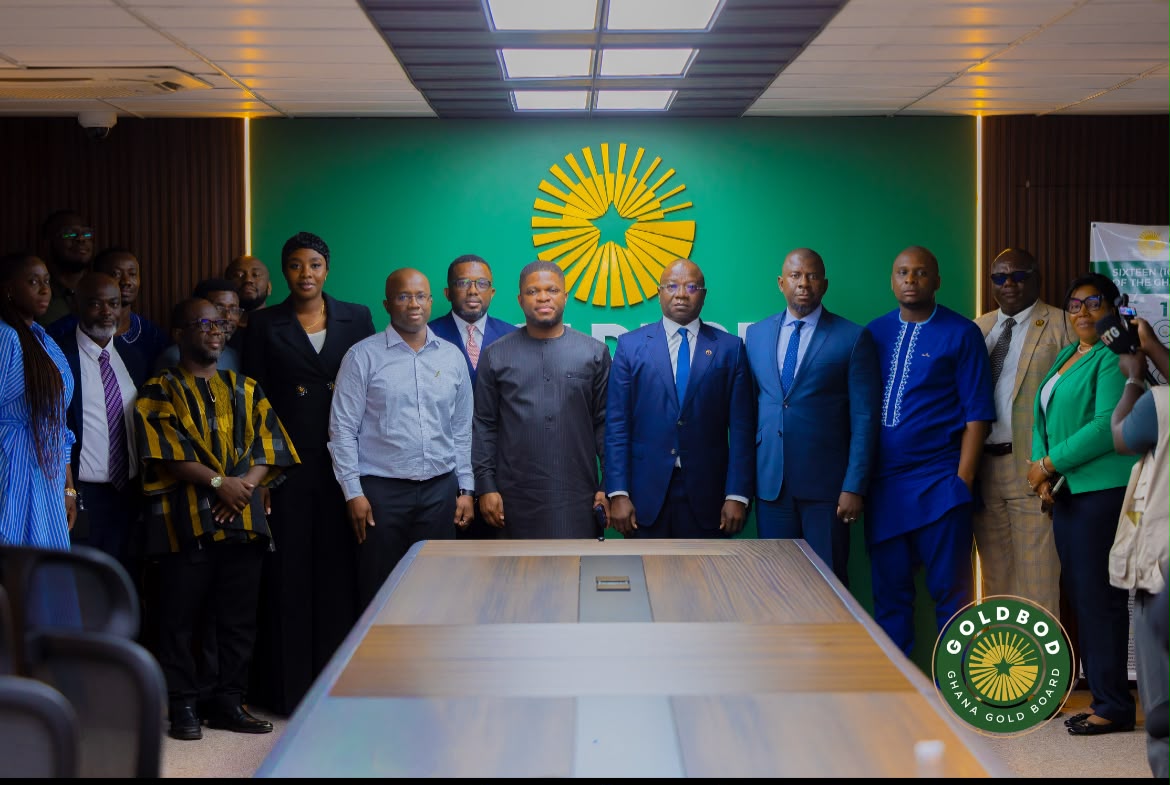
growing consensus that the newly formed Ghana Gold Board (GoldBod) must operate
with surgical precision.
The
memory of the 2022 financial crisis remains fresh, and critics argue that any
operational failure or corruption within GoldBod could trigger a “second shock”
to the economy. If the board fails to manage its new role as the sole off-taker
and exporter effectively, it could disrupt supply chains, spook international
mining conglomerates, and lead to a massive shortfall in anticipated revenue.
“Ghana
is putting all its eggs in one golden basket,” cautioned a senior researcher at
the Centre for Democratic Development (CDD). “If GoldBod becomes a site for
political patronage rather than technical excellence, the ‘Golden Reset’ could
quickly turn into a gilded disaster.”
Economic
transformation or high-stakes gamble?
The
administration remains undeterred. Gyamfi emphasized that the “leaks” in the
previous system referring to the era of the “Gilded King” were systemic and
required a radical break from the past. He argued that the centralization of
gold trade is not an act of “resource nationalism” but one of “economic
survival.”
As
the government prepares to fully operationalize the sliding royalty scale and
GoldBod’s trading floor, the eyes of the international market are on Accra. The
success of this policy will determine if Ghana can finally transform its status
from a “resource-rich but cash-poor” nation into a self-sustaining economic
powerhouse.
Credit: newsguideafrica.com