GoldBod CEO Proposes ‘Involve, Protect, Expand’ Model to Transform Ghana’s Mining Sector
The Chief Executive Officer of the Ghana Gold Board (GoldBod), Mr. Sammy Gyamfi, has proposed an “Involve, Protect, Expand” (IPE) framework as a new approach to rebuilding the social license of Ghana’s mining industry and ensuring that mineral wealth delivers greater benefits to host communities, the youth and the wider economy.
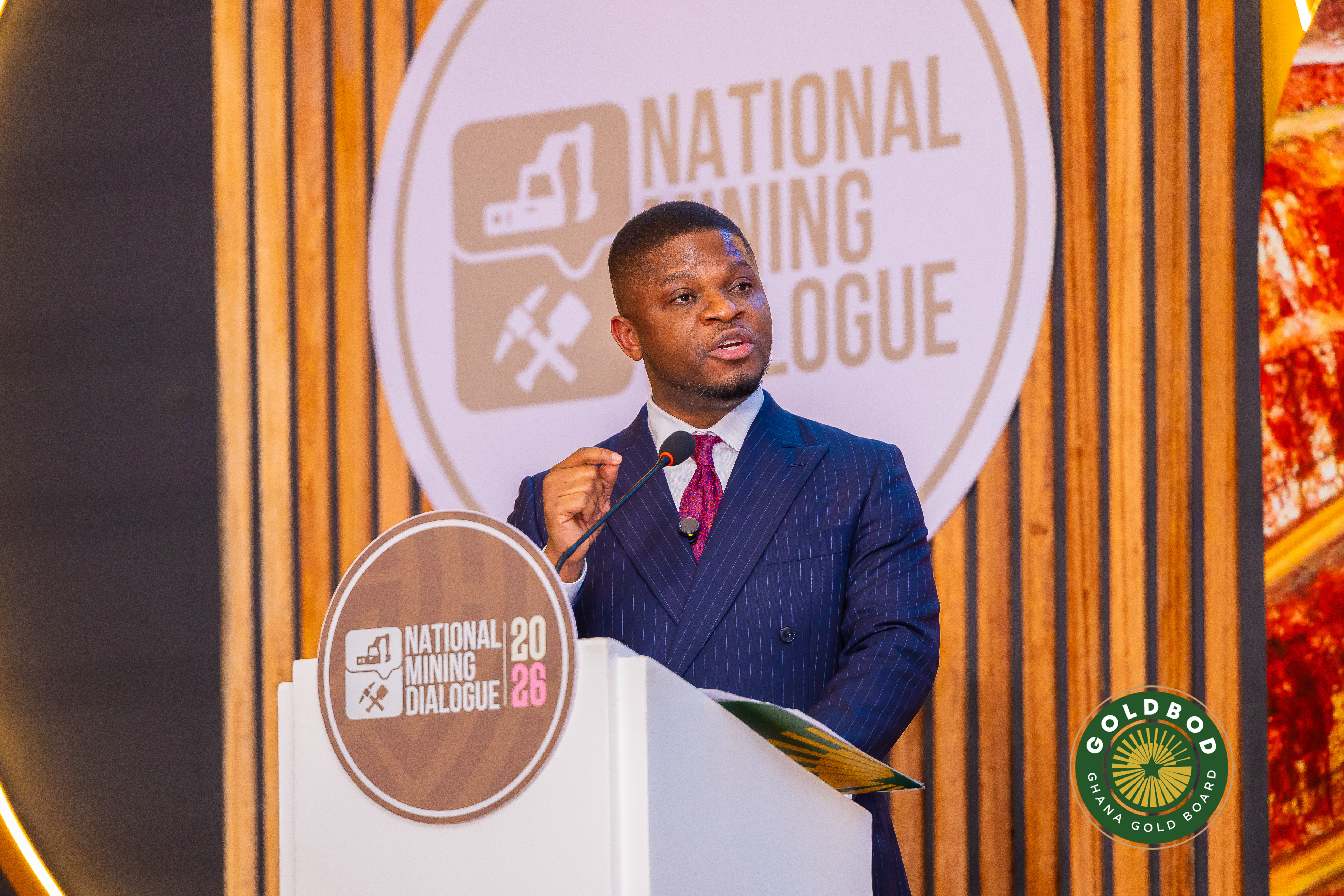
Speaking at the National Mining Dialogue 2026 in Accra on August 18, 2026, Mr. Gyamfi said Ghana must move beyond simply extracting minerals to creating an inclusive mining economy in which communities become active participants and beneficiaries of the value chain.
Under the “Involve” pillar, the GoldBod CEO called for mining communities to be recognised as economic shareholders rather than merely land donors. He proposed greater community participation in licensing, improved access to mining-related opportunities, stronger youth pathways into skills and mining services, higher and more decentralised local royalty retention, and clearer commitments by new mines to create jobs, businesses and infrastructure.
The “Protect” pillar focuses on safeguarding Ghana’s water bodies, forests, farmlands and public health. Mr. Gyamfi called for mandatory and effectively enforced reclamation and reforestation, stronger formalisation and traceability of artisanal and small-scale mining, and prosecution of operators who violate environmental and mining laws.
Under “Expand,” he proposed deliberate support for Ghanaian ownership and capital across exploration, production and mining services, alongside accelerated development of local refining, jewellery manufacturing and other downstream industries. He also advocated support for responsible ASM operators with appropriate hard-rock mining equipment and sustainable repayment models.
Mr. Gyamfi said the IPE framework was already being reflected in GoldBod’s programmes, including efforts to formalise ASM, expand local refining, strengthen traceability, support geological investigations and protect the environment.
He added that GoldBod has also begun reclamation of 50 hectares of degraded land in the Tano Nimri Forest Reserve, with plans to extend the programme to another 100 hectares.
He said the ultimate objective was to build a mining sector in which Ghanaian communities are not spectators but active participants in ownership, production and value creation.
“If we get this right,” Mr. Gyamfi said, Ghana will not only produce gold, but also “prosperous mining towns, strategic industries around its minerals and deeper community trust.”
The IPE framework therefore offers a practical pathway for repositioning Ghana’s mining sector as a catalyst for broad-based development rather than extraction alone.
By involving communities and young people in the value chain, protecting the environment and strengthening responsible mining, and expanding Ghanaian ownership, local refining and downstream industries, GoldBod is advocating a mining model that keeps more value within the country.
The success of this approach, Mr. Gyamfi emphasised, will ultimately be measured not only by the volume of gold Ghana produces, but by the jobs created, businesses developed, communities transformed and opportunities secured for future generations.